
21 Bobs for Women Over 60 With Glasses
A bob can look different the moment you put your glasses back on. The arms lift hair over your ears, and a fringe that fell away from your face may sit on the frame. Wear the pair you reach for most to the appointment.
These bobs for women over 60 with glasses show how to leave breathing room near the frames. A hairstylist interviewed by Who What Wear suggests wearing the frames during the consultation so your stylist sees how the cut falls around them.
1. Jaw bob with slim wire rounds

Slim round metal frames leave plenty of cheek visible above a strong jaw-length cut. The two shapes meet without much overlap if your front ends stop well below the bottom of the lenses.
If you wear earrings, try a pair with the glasses before your stylist refines the side. An extra sliver of length can keep the hair tucked when you remove your frames.
With a thin frame that nearly disappears in profile, the edge of the cut will be the sharpest line around your face. Ask to see it from both sides.
2. Ear-length crop bob with clear acetate

An ear-length crop makes transparent frames stand out because you can see the arms through the clear plastic. Leave a slight curve at the temples if you want some hair alongside that thin line.
Try looking down with your glasses on. If the front slides into the lenses, ask the stylist to retain enough reach to tuck the corner or shorten it so it falls clear.
3. Brow-skimming fringe with narrow rectangles
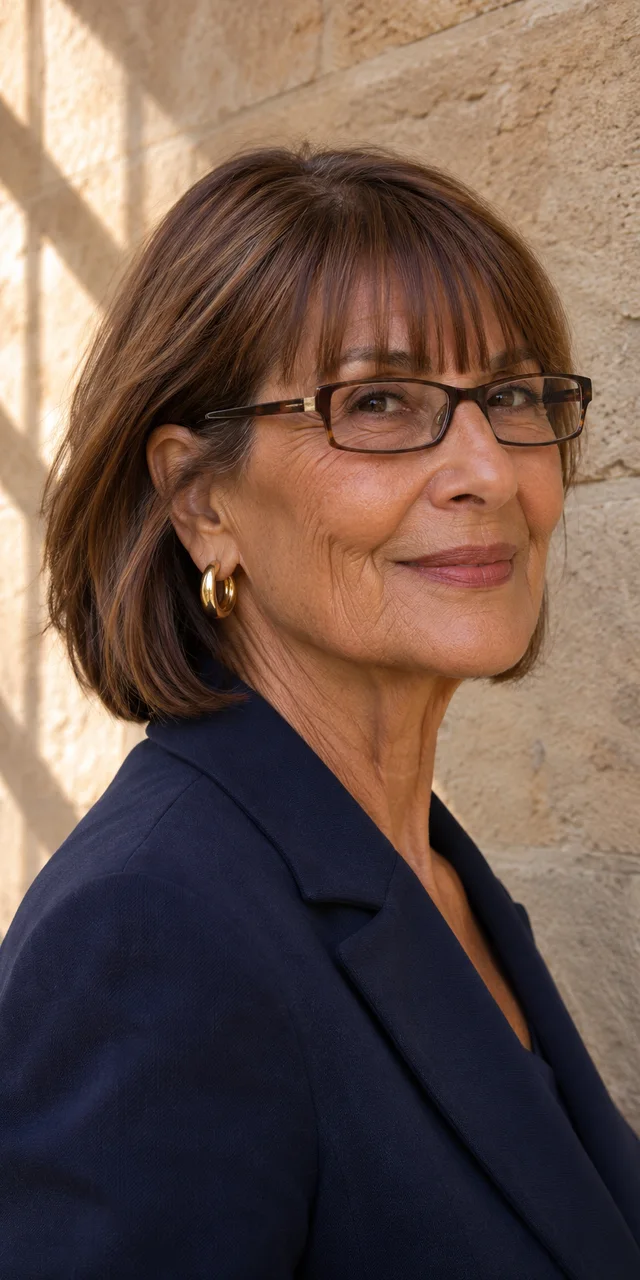
Narrow rectangles sit low enough on some faces to leave a strip of skin beneath a fringe. That small space keeps the separate lines visible. Before you settle on brow length, put the frames where they sit during a long day.
Check it dry. The ends may drop when you comb the fringe again. Ask the stylist to wait until it settles before making the last pass.
4. Short French fringe with cat-eye frames
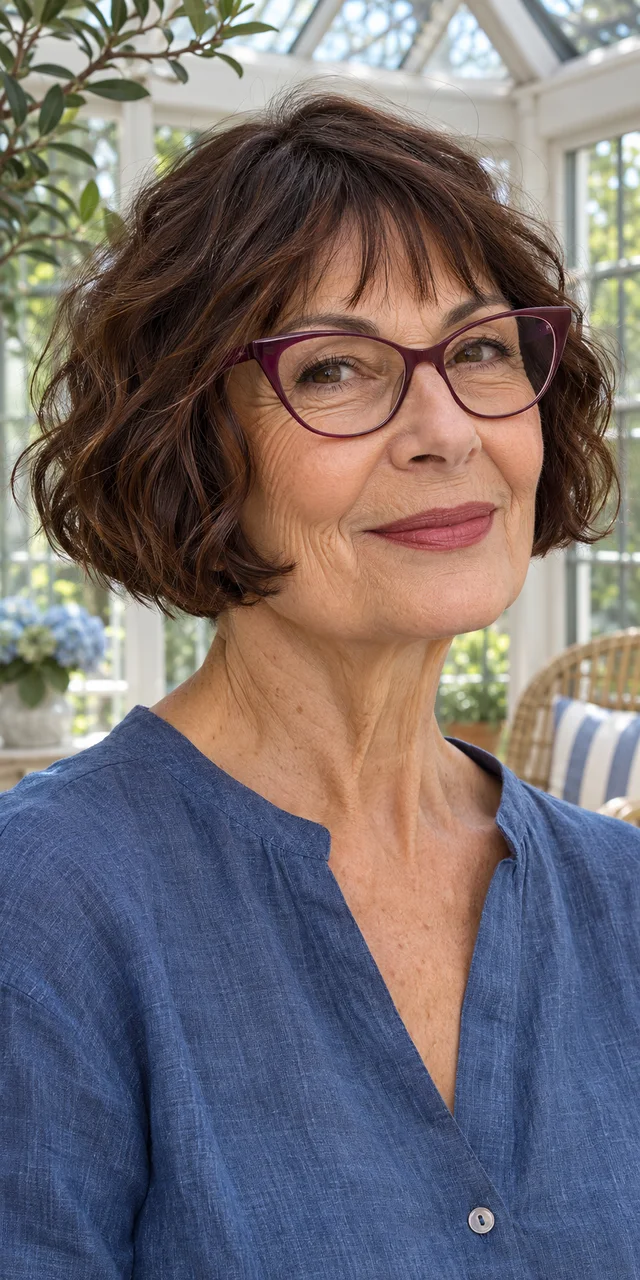
The upward corners of cat-eye frames can share space with a short French fringe. The longer front of the bob still brushes the jaw, and a short clear strip above the frame keeps hair out of the way.
Check the outer corners after you smile and talk for a few seconds. If wisps at the temples brush the frames, leave those pieces long enough to catch behind your ears.
5. Curtain-fringe bob with round frames

A curtain fringe can leave both lenses clear while the ends curve beyond the frame. This works if the front already parts at a point where the shorter pieces can move outward without catching.
Pull your glasses down and push them up again during the dry check. If the curved side of the bangs gets trapped at the hinge, save more length so it reaches past that spot.
6. Long swept fringe with browline frames
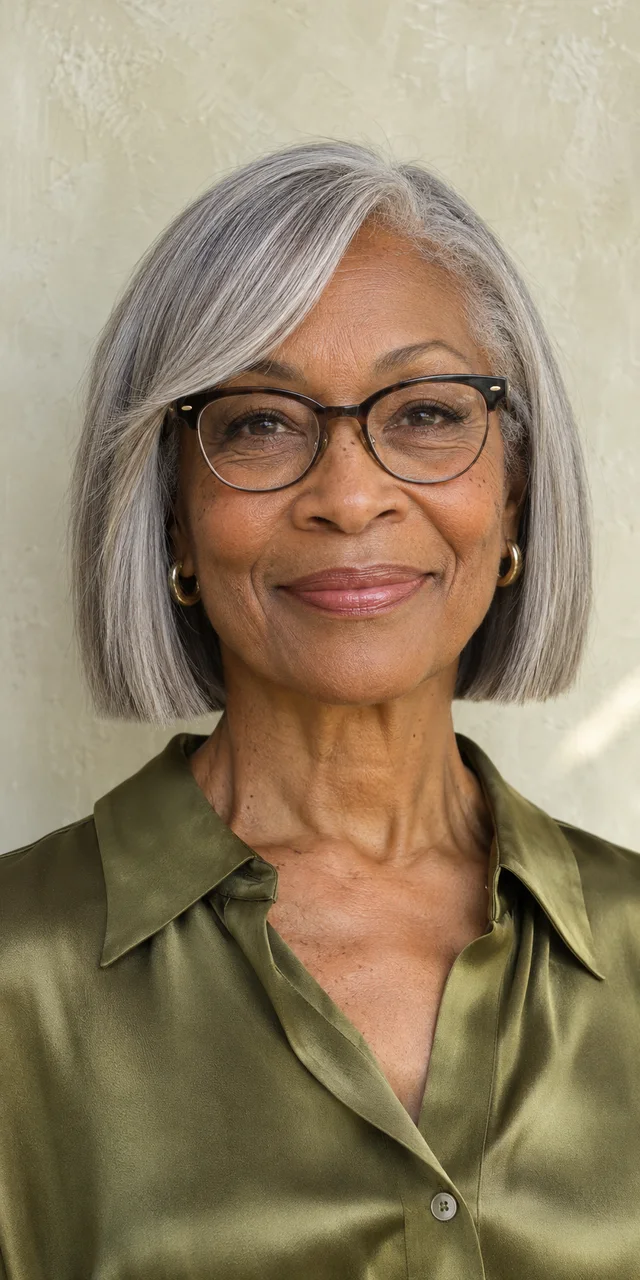
A swept fringe sits on a diagonal against the horizontal top of browline glasses. Let it fall beyond the outer corner of the lens so the browline and fringe each have their own clear edge.
Tell the stylist which way your hair falls without a brush. A sweep across the opposite side may look good in a photograph and take more work before breakfast.
7. Side-tucked bob with thick acetate arms

Thick acetate arms take up room behind the ears, and a jaw bob can have enough length to tuck past them. It helps to keep the top layer flat where it crosses the outer hinge.
Take your glasses off with one hand the way you do at home. If the tucked hair comes out with them, ask for a little more length or keep the tuck on the side you adjust less.
For a second check, turn your head toward the shoulder. If the arm nudges the bob outward, show your stylist the spot before they reach for thinning shears.
8. Untucked bob with rimless glasses

Rimless frames show more of the face and can sit beneath a bob worn loose at both temples. A dry line just below the jaw keeps the hair tips away from the cheek and lets you see the full lens shape.
If you feel strands between the pad and your skin, show the stylist the spot. A small change to the direction of the front section may be enough.
9. Angled bob with angular frames
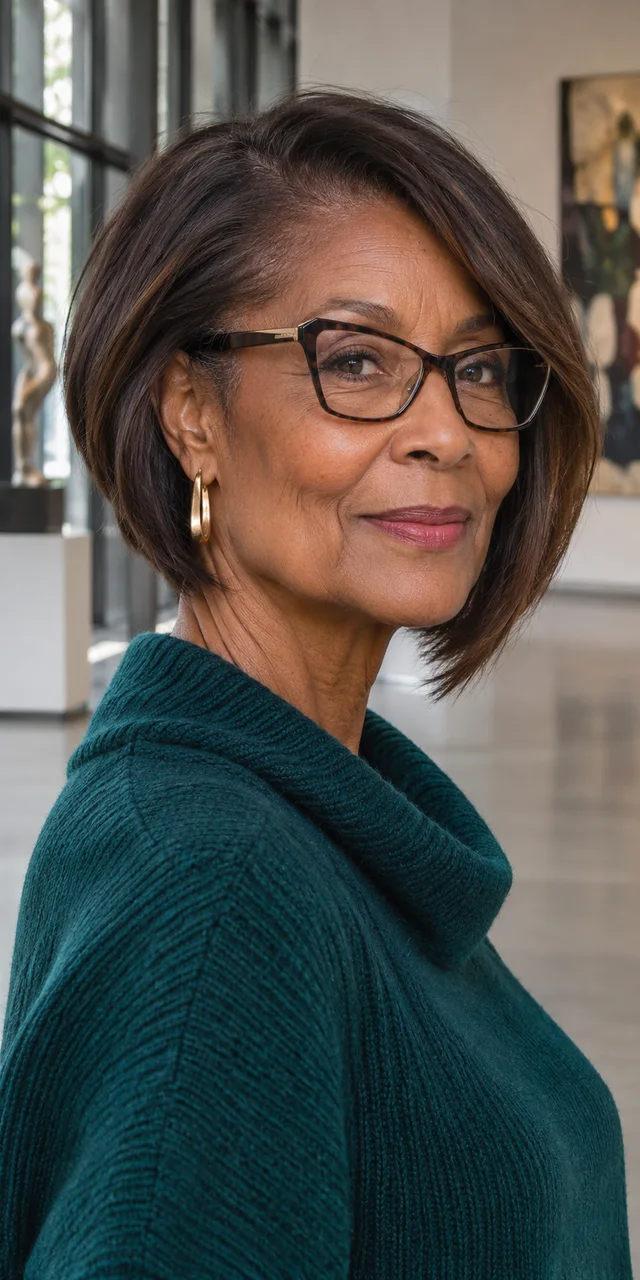
An A-line bob drops toward the chin, echoing the long edge of an angular frame. You can see the slope best when the arms of the glasses sit flat and the front points lie loose.
Bring the frames and a side-view reference to the salon. Ask the stylist how much longer they’d leave the front on a side that needs to tuck.
The glasses-on test
- Look down
- Tip your chin as if you’re reading a menu and check for fringe against the lenses.
- Take your frames off
- Watch which pieces snag where the arms curve behind your ears.
- Put the frames back on
- Tuck one side. If hair lifts above the arm, show your stylist where it happens.
10. Rounded bob with square frames
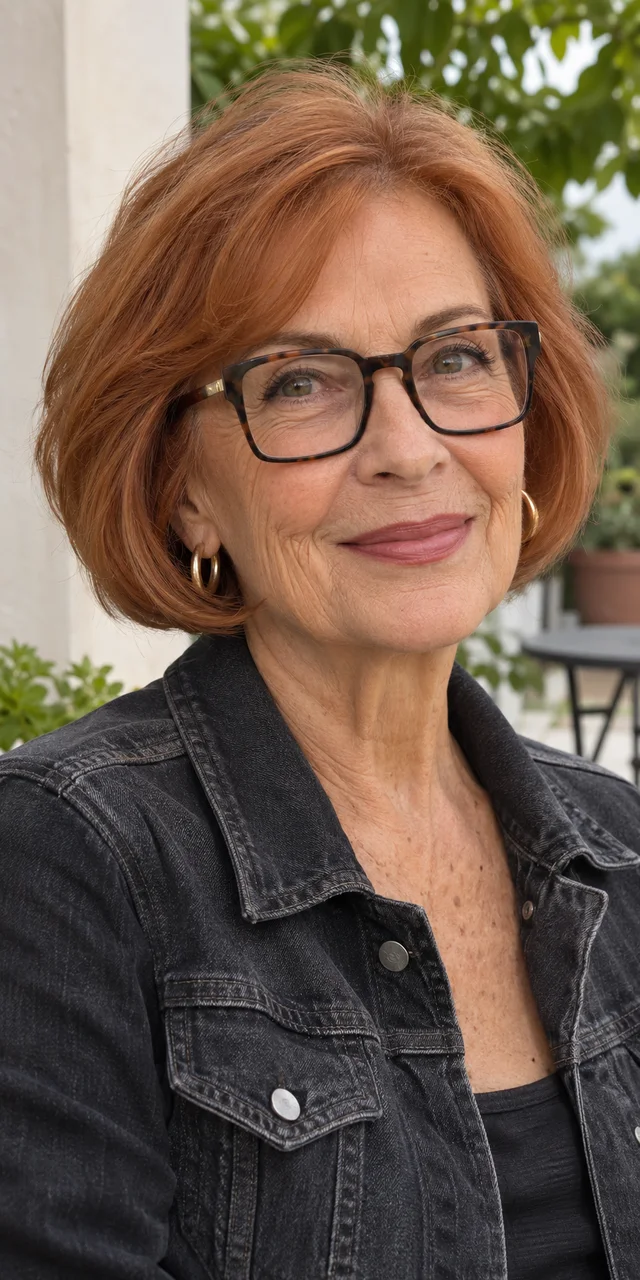
A rounded bob can soften around the back of square glasses while leaving a clear temple. The sides are long enough to sit forward or back depending on where the frame arms sit.
If your hair is dense, ask to see the build-up above the arm. A stylist can check how much hair piles up there before they change the outline.
11. Stacked nape bob with slim oval glasses
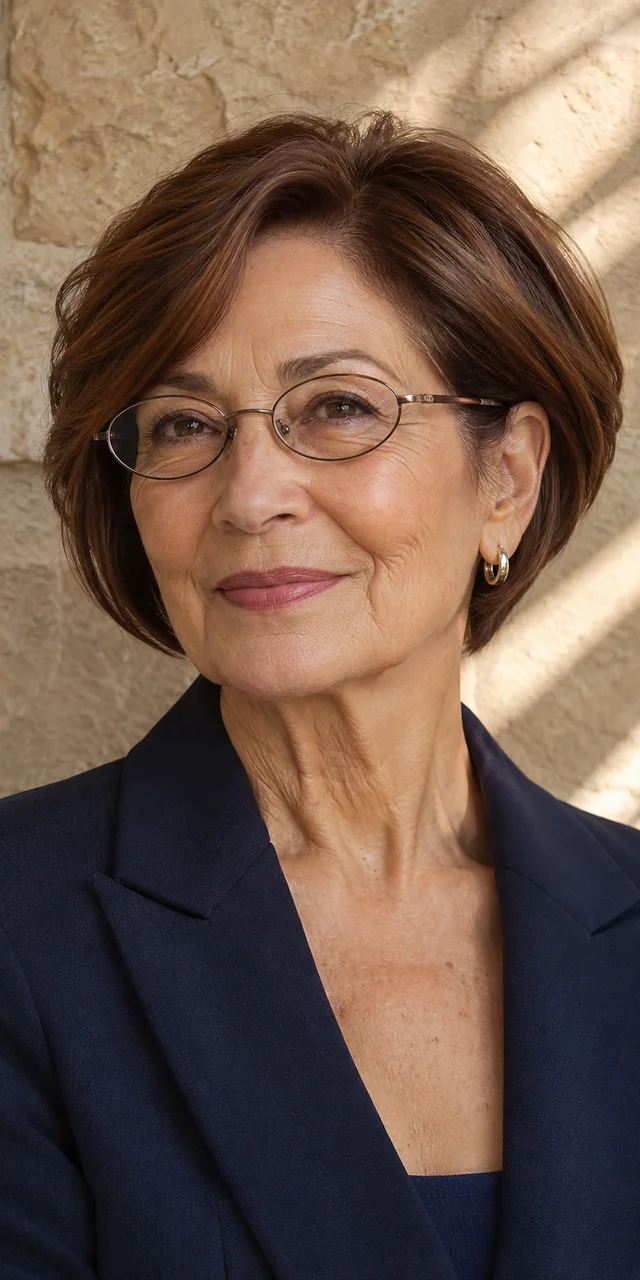
Oval glasses have gentle edges, so a stacked bob can carry a little more structure at the back. Put the weight below the curve of your head and keep the upper ear free for the glasses arm.
Check both sides in a small mirror after your stylist dries the cut. The frame may sit level even if your hairline grows lower on one side.
12. Cheekbone bob with oversized frames
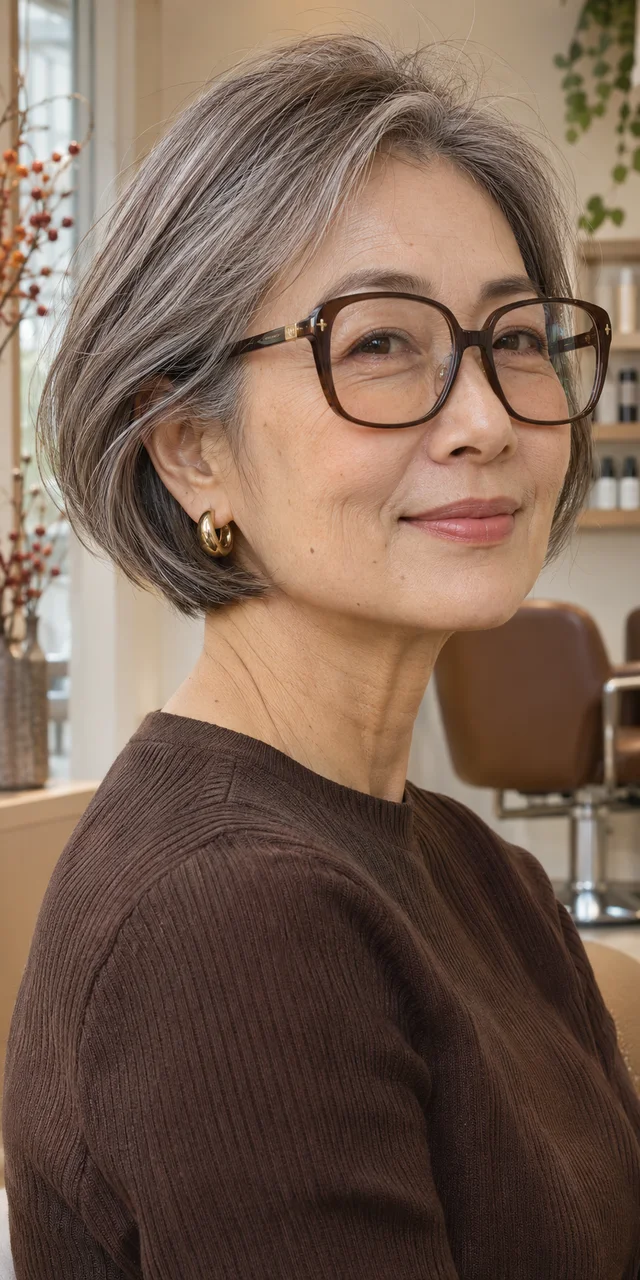
A cheekbone bob sits close to the lower outside corner of oversized frames. Cut clear of the point where lens and hair meet if you want to keep strands off the glass while you read.
Put the frames on before the front corners get their last trim. If the cut slips behind the glasses arm, make sure there’s enough hair there to hold a tuck.
13. Neck-length shag bob with aviator glasses

Aviator frames often have fine arms, with most of their shape visible through the bridge and lower lens. A shag bob gives them a relaxed outline, and the neck-length back keeps some hair below the frames.
Check the short pieces. Ask which layers might touch the glass. Let those hairs dry so your stylist can see if they curve back toward your face.
14. Curly bob with a clear temple around the frames

A curly bob can keep its volume while leaving a little air where the glasses arms rest. Give your stylist a look at your curls on a regular day so they can see which ones fall onto the hinges.
Slip the frames on with dry curls in place. If one coil gets caught, move it with a finger before trimming. It may be long enough to sit to the side.
15. Coily bob with a side part and colorful glasses

On a coily bob, a side part leaves one temple open and lets hair sit above the colored frame on the other side. Choose the part you wear most so the sides can dry into the shape you had in mind.
Bring a photo from just after wash day and one from later in the week. Your stylist can see how the hair moves around the frames as the coils settle.
16. Wavy lob with soft rectangular frames

A wavy lob has enough length to tuck if you wear soft rectangular frames and like a clear side of the face. The bend can start lower down, under the outer corner of the lens.
Let the wave dry on its own during the length check. If the curve pushes the ends forward, ask the stylist which strands to leave long enough to tuck.
17. Blunt lob with black acetate frames
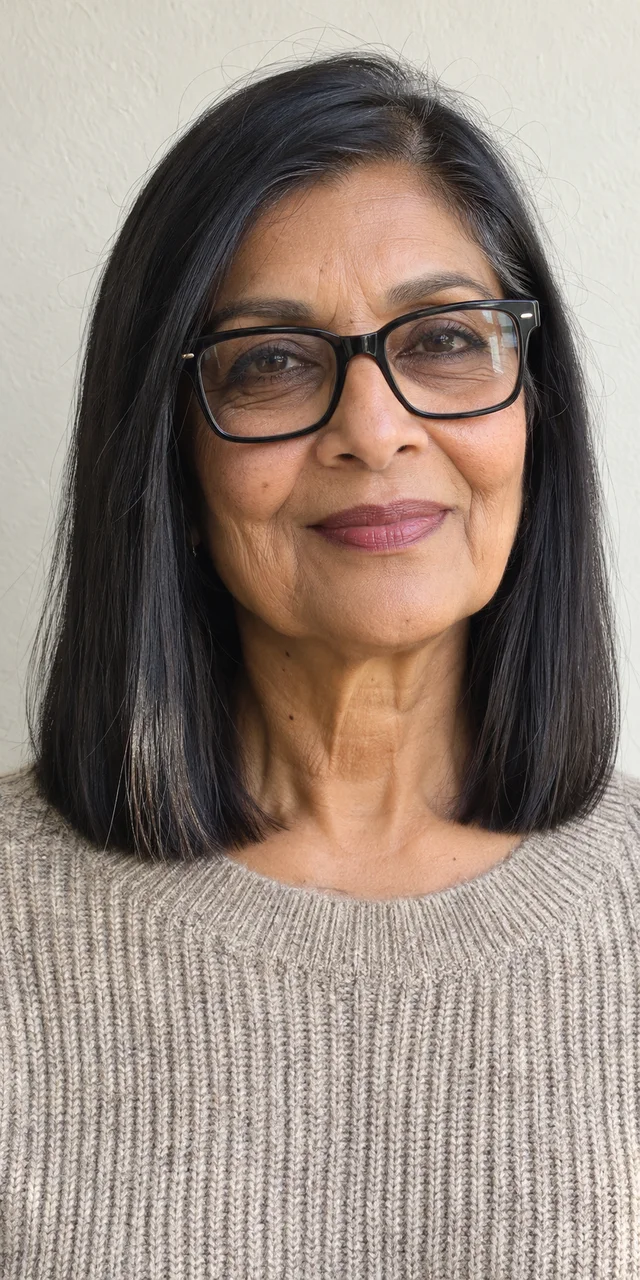
Black acetate and a straight lob both have strong lines. You can keep them distinct by moving the part slightly off-center and letting the hair fall below the lowest part of the lenses.
If the arms sit high, keep bulky face framing away from the hinge. A solid cut can still fit behind your ears if you leave the front past the point where the arms curve.
18. Asymmetrical bob with round glasses

An asymmetrical bob has one short side, which can put a favorite round frame and earring in full view. Decide which side you’d rather tuck before you pick the shorter point.
Check the proportions with both sides loose and the frames on. The difference in cut length should show without a tuck if you mean to wear it down.
19. Bixie bob with narrow metal frames
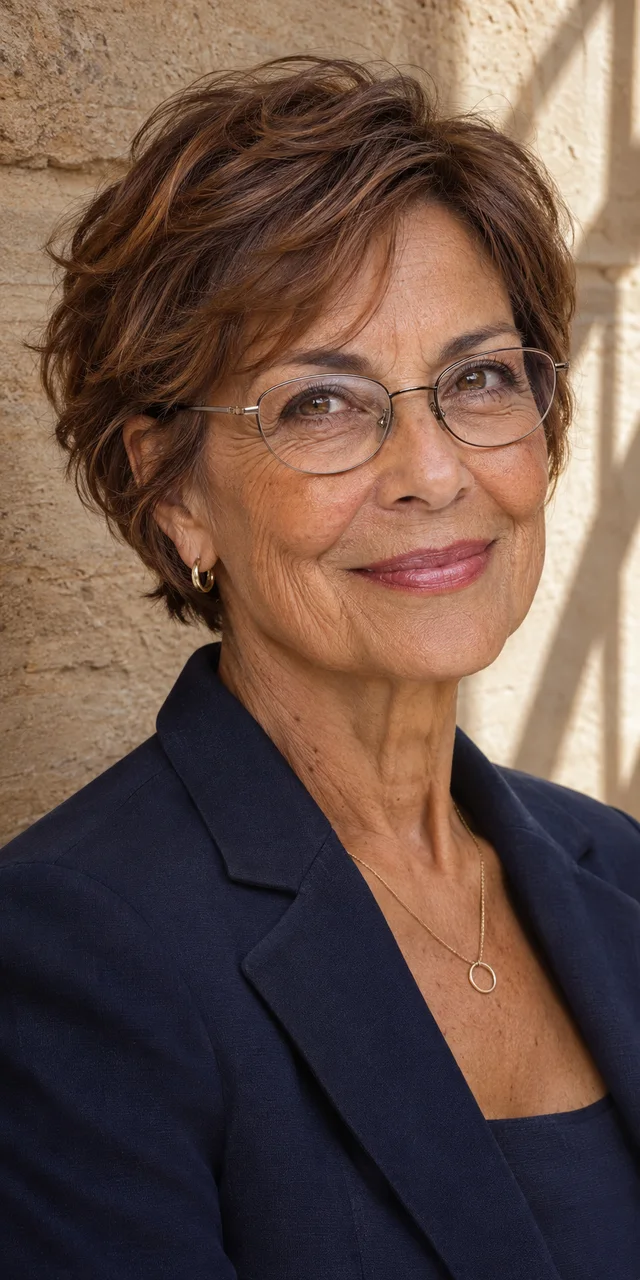
A short pixie-bob can stop before the arms of narrow metal frames get buried in hair. Keep just enough length to turn the front away from your face with a comb.
Test the placement at the hinge, where short hairs tend to stand up. If you like this much ear showing, see the pixie haircut comparison for shorter options.
20. Bob with jaw-length front layers and tortoiseshell frames

Tortoiseshell frames do part of the work around the eyes, leaving room for a bob with longer pieces around the jaw. This length is easy to tuck back when you need clear sight lines on a walk.
Leave a little reach. Ask your stylist to keep the shortest face-framing layer long enough to tuck behind the arm without pulling.
21. Collarbone bob with long layers and progressives

If you tip your chin up to use progressive lenses, check where the front pieces go when you move. Long layers on a collarbone bob can pass below the lenses without brushing the glass.
Switch to your reading position with your frames on. Ask your stylist to keep the shortest layer low enough to slide out of the way. For a shorter silhouette, compare short hairstyles for glasses wearers.
Take both pairs if you switch frames
Put on your sunglasses and regular glasses during the dry check. If one pair sits higher, give the fringe space over that frame. A hand mirror will show how much hair stays behind the arm when you slip the glasses off.