21 Short Hairstyles for Women Over 60 With Glasses
Bring the glasses you spend the day in. The right short cut leaves room for them where they touch your hair, above the lens and behind each ear.
These 21 short hairstyles for women over 60 with glasses include bobs, crops and pixies. Start with your frames, then think about which parts of the haircut you want to tuck, brush back or leave across your forehead.
If strands at the temples are sparse, use the fine-hair haircut guide to compare how much length different cuts can keep there.
Find cuts to try with your frames
Open the group closest to your everyday pair.
Subtle wire frames
Bold acetate
Clear or light frames
1. Blunt chin bob with wire frames

The line of this silver bob sits level with the jaw. Thin glasses leave that edge in full view, even when one side is tucked.
Put the frames on before the last trim so you can check the length with your chin in its usual position. Keep enough hair to tuck without pinning it.
In the chair. Check the bob with your glasses on and one ear tucked. A silver hem also changes against a dark coat. Let your hair down after taking the coat off and see if the tucked side settles back into place.
2. French bob with chunky acetate

The frame is already a strong horizontal line. You can leave the side pieces loose if you want something softer to show beside your cheeks.
Keep the ends light. A short, rounded bob and bold acetate frames both outline the face. An airy fringe leaves a break between the two.
If your hair springs up at the front, judge where the ends land once they’re dry. A fringe that sits above the frame in the salon should still clear it after you put on your reading glasses.
3. Rounded bob with clear frames

Clear frames bring a different kind of shine to a champagne-blonde bob. Keep the line at the mouth or jaw if you like the soft bend of the ends. The haircut can be snug at the back without sitting tight against the hinges.
Wear the clear pair when you choose the fringe length. It can look invisible in a straight-on photo, then pick up a little light as soon as you turn your head. That glint gives the cheek-length curve a clear edge.
4. Side-swept pixie with red frames

On a white pixie, a red frame gives the sweep an obvious stopping point. Ask for a diagonal fringe that passes above one lens instead of falling across it. Use your fingers to press the fringe into place while it cools after drying.
A big swipe of wax can pull fine strands into one heavy piece. Frame check. Look down at a book and see if the hair falls into your field of view.
If your frames have a higher rim than the red pair in the picture, make the part first and look at the line from the side. Keep the roots light so the longer side doesn’t flatten against the lens.
5. Tapered coily crop with gold frames

A close taper makes room for the slim gold arms of the glasses. Leave enough length at the top for a coil to form, especially if the sides need to sit close. The section behind the ear may shrink more than you expect.
Think about how often you take the frames off. With the side close to the head, the arms can slide out without dragging a curl along. A little silver beside the ear can show the taper.
6. Short shag with round tortoiseshell

Take a picture after the ends have had time to move. If the fringe touches one rim after you’ve walked around, move the part a fraction instead of cutting above both eyebrows.
Round tortoiseshell frames and a short shag work well when you can see daylight between the fringe and the rim. Keep the little flicks behind the ears if they stay out of the hinges.
The back can sit longer for movement while the face remains open. Home styling. Dry the fringe first. The ends can air-dry while you get dressed.
7. Jaw-length bob with a deep part

Switching the part changes which side carries the weight. If one hinge catches the shorter side, move the part a finger nearer the center before changing the haircut. Wear your usual part when you arrive so the stylist can see it in place.
A deep part can be useful if a short strand is always falling under one lens. Fine hair can separate at the crown when it travels too far across the head, so look from behind before settling on the part.
8. Soft stacked bob with rectangular frames

Look at a stacked bob in profile. The back has a gentle rise and the section beside the eye can stay flat, which gives a straight top rim room. Ask the stylist to show the shelf at the nape in a hand mirror.
You may want a smaller step between layers. That works best once you’ve chosen where the top of the stack starts, since a high stack can push extra hair forward. Try your winter scarf in the chair if you wear one most mornings.
9. Ear-tuck bob with upswept frames

A cat-eye frame shows its outer corner when the hair is tucked. Ask for a cut that allows the ear tuck without leaving the ends hooked around a hinge.
A quick try-on in the chair will tell you more than a front-view photo alone. Try-on tip. Slip your glasses off and back on after tucking. Pinching at the hinge is a cue to change the placement.
A small hoop often leaves enough room to slip the frame arm past it. Put the earring in first and let the stylist see where you want the outer corner of the glasses to show.
10. Below-the-jaw bob with a brow-length fringe

The longer sides give you another way to wear it when the fringe grows. Leave room to tuck the outer ends near the ears and sweep the center slightly aside on days you need to read.
Keeping an open bit of brow helps you see the top rim. A long bob can support a fringe with a solid line. If you switch between progressives and reading glasses, bring both pairs.
Pick the higher rim as your guide so you don’t wind up with two different fits. Sweep the fringe aside for the second pair if you want to keep the length.
11. Soft bixie with straight browline frames

The crown of a bixie can stay soft while the cut opens around the outer corner of the glasses. A clean line beside the eye leaves space for a bold browline.
Keep enough length in front of the ear if you prefer a little coverage when the frames come off. The short back can keep a scarf from pushing hair into the arms.
Look at the longer side while you take the pair off. If the hair gets caught behind the hinge, it may need to sit a little higher or tuck to a different spot.
12. Tapered nape bob with an exposed ear

If the back of your bob catches on a coat collar, ask about taking the nape higher. The front can still sit along the jaw. Tuck one side to show the frame arm before agreeing to shorten the other.
Check the untucked side in profile too. A tuck can hold on one side and slide out on the other if the frame sits unevenly. Leave the shorter hair where it lies naturally, then look at the outline behind both ears in a hand mirror.
13. Curly pixie with a side part
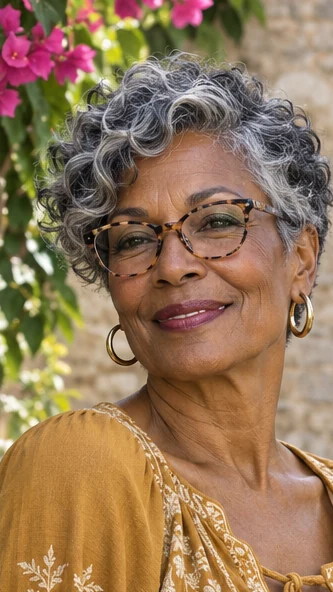
A curl can spring back over the lens even if it sat clear when wet. Give the stylist a look at your dry part and show where the front clump gets in the way.
A little extra space beside the glasses often works better than trying to brush the whole curl back. Curl note. Rewet the one curl that drops forward before adding more product.
Try the fringe and the part after walking outside for a few minutes. Wind can lift a loose front curl right over a lens. A small change near the part may clear it.
14. Brushed-back crop with angular frames

A strong frame can carry a lot of the shape at the front, so the top needs only enough lift to keep the brow open.
If you like a little movement, leave the small sections above the ears loose and use a brush only on the roots. This crop leaves the full frame visible from brow to hinge.
It suits a front section you can coax back with wet fingers. If the hair falls forward the moment you let go, see how it behaves with a dryer before choosing the shorter cut.
15. Piecey crop with narrow rectangles

A few broken pieces across the forehead soften the straight lines of a narrow pair. Keep the fringe ends clear of the lenses and leave the crown a little longer if the hair grows forward.
Too much styling paste can join the ends into one lump. You can keep the ear clear even if the front stays soft. Check both sides with your reading pair if it comes to a different height from the frames you wear outdoors.
16. Asymmetrical bob with round metal frames

One side can cover part of the ear while the other stays tucked and open. Put the longer edge on the side where you like to show less frame.
Check the profile with your head turned toward the mirror. The difference should still look deliberate when the short side is untucked. This cut needs a small difference in length to show.
On the open side, use just enough tuck to see the round frame above the ear. Let the other side dry without brushing it back and see where the ends sit when you take the glasses off.
17. Close silver crop with thick black frames

With so little hair around the temple, the outline of the glasses becomes part of the look. A close crop lets you switch between a heavy pair and a light pair without restyling.
If you’re going short for the first time, start with a little extra length and work down. Length cue. Check the scalp and hairline in daylight before going shorter.
A dense black rim may show up more than you expect next to a silver crop. Try it in an outdoor mirror or on your phone, where the light has a chance to catch the shorter sides.
18. Feathered ear-length cut with oval frames

Try turning the ends back with damp fingertips before using a dryer. The first bend beside the ear is what gives you the open line. Pin that one section if it needs to set and leave the rest to dry where it falls.
Leave the feathered ends long enough to turn away from the temple. They can soften a narrow oval frame without covering its sides. If they fall toward your eyes as they dry, brush back from the root.
19. Jaw-length curly bob with a temple clip

There’s no need to recut a curly bob each time you change frames. A flat clip above the temple holds one cluster clear of the hinge. Put it a finger above the frame arm so the two don’t touch.
Move the clip higher if the loop drops back across your lens. If a curl keeps getting caught, move the clip a little farther from the hinge. One flat pin under the same group can add grip without drawing more hair away from the cheek.
20. Tapered cut with longer sideburns

A little length at the sideburn can help a short cut feel less bare around the frame. Keep the hair in front of the arm, where it won’t bunch against the hinge. Some frames sit low behind the ear.
Show the stylist where yours rest before cutting the sideburns back. Decide where you want the sideburn to end by itself. The frame arm can cover quite a bit of hair at the ear, so leave a little to show if you like the line.
21. Glasses-friendly crop with a long top

A longer top gives you room to change the part while keeping the sides short. Wear it to one side with a slim frame or push it back when you switch to a heavier pair.
If the temple is sparse, leave enough at the front to soften the shift between top and sides. A short profile puts more focus on the glasses when the top is brushed back.
On looser days, part it closer to the middle and let one long section fall. Try both directions while your hair is damp so you know how much work each one takes.
Before the salon
- Take a front photo with your everyday frames to show where the top rim sits.
- Take a side photo with one side tucked to show where the arm rests.
Ask for the final check after the cape comes off. Move your head like you would while reading or looking over your shoulder.
The portraits are AI-generated illustrations of the featured looks.

2 Comments