23 Chin-Length Bob Haircuts for Women Over 60
Sit upright and turn toward a side mirror. The chin gives you a visible place to set a bob, but the back and the front can still have different lengths.
Take the same haircut photo to the salon from both directions if you can. Point to the place you want the ends to reach when your hair is dry.
1. Blunt dark chin bob

A solid edge shows each time you turn your face. Set the line with your chin level and ask for a mirror view from the side. Dark hair makes the lower edge easy to see, especially when the top lies close.
Pick where that line should sit before the stylist starts on the back. An edge at the chin can still leave enough length for a tuck on one side. If you want it to dry straight, show where the hair usually bends.
2. Straight silver bob with one side tucked

Keep the tucked side open enough to see the silver line near the temple. Let the other side hang loose as you check it.
If the ends separate into small pieces, ask to cut a clearer line along the bottom. The silver can still show a few darker strands underneath when you turn.
The bright hem looks especially clear against an open dark collar. A tuck exposes the clean edge on the other side. Keep the shorter piece long enough to fit behind the ear without a clip.
3. Chin-length French bob with a soft fringe

A light fringe leaves a little room above the brow. Keep the sides at the jaw if you want to hold onto the chin-length shape. A soft fringe leaves more of the brow in view than a heavy one.
Keep its outside pieces long enough to meet the sides of the bob. Let the ends dry before you decide if the center needs another trim. A little room at the temples gives you a place to tuck without flattening the fringe.
4. Curly chin bob
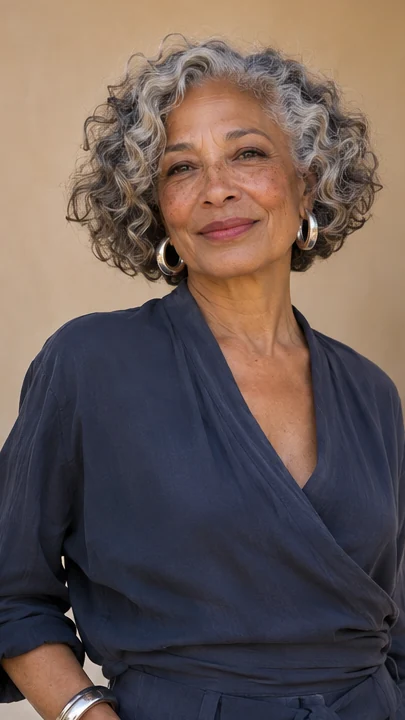
Ask where the lowest curl lands dry. Leave the springiest curls a little longer wet if you want them to settle near their neighbors. Meet your stylist with the curls set as you wear them.
Choose which groups you want to see along your cheek, then check the back as they dry. Leave the shortest ones long enough to make a full turn. If one side shrinks higher, judge the lower edge after you’ve moved the part back into place.
5. Side-parted chin bob with curved ends

A wide brush can turn the ends under without making a tight roll. Set the side part first so you know where the edges land. A broad bend can look rounded without lifting very far from the neck.
Set the part while the roots are damp and dry the closer side first. Let the other side fall into its curve before brushing. When you turn your head, the edge should stay visible even if the ends drift away from the jaw.
6. Chin bob with an open forehead

Give the longer front a gentle sweep at the roots and let the bottom sit wherever it falls.
If a corner drops over your eye, move the part a little rather than pushing the entire front back. Keep enough hair on each side for a tuck if you want another way to clear the forehead.
Comb the front back while damp and see if it stays in place. At the mirror. Leave it a little longer on the side that tends to fall across your brow.
7. Soft angled chin bob

The back can clear the collar while the front brushes the chin. A modest angle is easier to tuck than a long, pointed side. Ask to see the angle in profile after the dry ends settle.
A shallow slope shows more around the jaw while the nape leaves space for a raised collar. If the front point looks thin, bring it up a little so it still reads as part of the edge. Try it loose and behind the ear.
8. Jaw bob with one longer front section

Leave the long piece as wide as you want it to show against the rest of the cut. Check it loose before adding a side tuck. Let the longer piece sit by itself when you look at the edge from the front.
If you want the difference to stay quiet, use a small section beside the cheek. Check what the two sides look like with the part you wear every morning. The edge can still feel like one cut when both sides fall loose.
9. Chin bob with a side fringe

A fringe that travels toward the temple can leave one eye more open. Try it with the glasses you wear most before taking it shorter. Push the longer fringe toward a temple while it is damp.
A diagonal can make room above one lens without covering the rest of the forehead. Leave enough length to sweep the end behind the ear if it keeps falling.
Put the frames back on to see where the hair naturally lands. Watch the diagonal once you lower your chin and turn to read.
10. Barely layered chin bob

Leave the last inch of bob where you can see it after the top moves. A long layer can give a little lift at the crown while a lower edge follows the jaw. Ask to see the end of that layer against the rest.
If the bottom already looks sparse, keep more of it intact. Give the crown room to move and keep the lower edge in view. Ask where the short layer will end before you agree to it.
11. Chin bob with wispy bangs

Keep the bang section shallow to preserve hair along the sides. Fringe check. Let both the fringe and the ends dry before the last trim.
Give the wispiest strands room to show above the brows. A small front section means the sides can still read as panels at the chin. See how the longer part sits with your glasses on.
If a few strands touch a lens, sweep that section aside before you ask for a shorter line across the entire fringe. Keep the lighter front away from the brow during the last check.
12. Wavy blunt chin bob

Leave enough length for the last bend to sit beside the jaw. Scrunch once while damp and leave the ends to finish drying. Choose a length that leaves a bend near the lower edge.
Dry one side loose to see how it forms without a brush. The ends can still sit as a solid shape even when the wave turns. Show your stylist the point where it bends away from your jaw so they can leave space for it.
13. Chin-length crop bob with an open ear

Ask the stylist to leave one panel long enough to tuck. The ear shows when you want a little air around the frame arm. Use a mirror to decide how much of the upper ear you want to see.
The uncovered side can give the bob a closer profile while the other panel stays near the cheek. Check it with your glasses before choosing a shorter sideburn. If you wear a long earring, make sure the tuck doesn’t catch at its post.
14. Chin bob with rounded graduation

Ask to see the back while you sit upright. Low graduation gives the edge a curve, and the hair near the crown can still lie where it normally falls.
If you want the nape to grow in softly, show that point before your stylist starts layering it. Let the sides cool before judging the curve at the jaw.
Let the crown fall toward the nape before asking for more lift. A little graduation at the neck can curve the edge under. Keep the rise low if you want the nape to grow into the length.
15. Chin bob with asymmetrical ends

One front corner can sit a little lower without changing the whole outline. Look at the front with your hair parted the way you wear it. Wear your normal part and compare the ends in the mirror at eye level.
One front piece can hang a little lower without getting in the way of a tuck. If the short side opens too much near the cheek, ask for just a small step between the two lengths. Check it with your head turned.
16. Soft shaggy chin bob

Keep shorter layers around the cheek and leave the bottom long enough to trace the jaw. The mixture works when you can see the lower edge through the loose layers.
Keep the shorter layers where they can lift near the cheek and let the rest of the hair sit at the jaw. A shaggy bob can still have a visible bottom.
Look at where the ends separate after a wash. If they open into thin points, ask for more weight through the edge when you go back.
17. Chin bob for springy coils

Set the length while the hair sits dry. Curl check. If you like a little height at the crown, keep more there and adjust the sides separately.
Check the curve with the coil groups dry and arranged as you like. The sides may draw up unevenly, so show the ones you want to keep beside the cheek.
Let a few groups reach the chin while shorter ones sit above them. Leave enough length at the nape if you want the bob to show when you turn.
18. Chin bob with a long curtain fringe

Part the fringe at the point where it wants to split and see where the longer pieces land. Keep enough hair to sweep back on days when you wear frames.
If one side dries inward, use damp fingers to give it direction before putting on your glasses. Let the longer edge sit near the jaw.
Compare where the shortest section lands when you take the glasses off. Start the shortest piece near the cheek. Make sure it stays out of your eyes when you tilt your head down to read.
19. Slim French bob with a center part

A center part lets the sides sit close to the cheeks. If one section flips, see if a slight shift in the part leaves it where you like it. Leave enough length at each side for the center part to stay quiet.
If the hair near the ear wants to flip, check which side does it on a normal day. A narrow center line still works when a few strands cross it. Wear the bottom loose before you decide where that front piece should end.
20. Chin bob with flicked ends

Turn the ends away from the neck with a wide brush. If they naturally flip near the jaw, let that shape do some of the work. See where the ends move once the hair is dry and your collar is down.
If the flick comes from the cut, a brush doesn’t need to turn every section. Start with the strand you notice first from the side. Leave the lower edge long enough to show daylight under it when it flips.
21. Chin bob with gray face framing

A bright gray section near the temple can show off the line of a simple bob. Decide if you want that strand visible when the hair is tucked.
A silver section can sit like a bright line beside the cheek when the bob hangs loose. Put the part in where you normally wear it before choosing the placement.
Look again after one side tucks. If the pale strand disappears, leave a little space for it in front of the ear and keep the rest behind.
22. Tapered nape, chin-length front
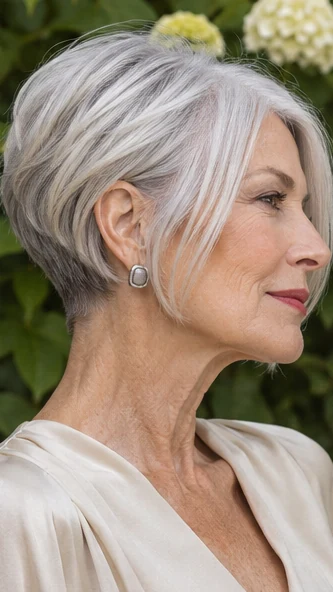
Wear the longer side down while you look at the nape, then tuck it and check the difference. A low taper can sit just above a scarf without getting too close at the neck.
Make sure the front panel still reaches the jaw once dry, especially on the side that bends inward. Take a rear photo with the scarf off to check the taper.
Keep the neckline out of a scarf and set the front by the jaw. Check both profiles. The angle may read differently when one side is tucked.
23. Soft blunt bob with a hollow under the ear

Follow the shape of the jaw while keeping room around the ear. Ask how much the ends will shift when you put your glasses back on. The hollow leaves a little space where the hair moves behind the ear.
Let it show when you look in profile before you ask for the edge to come higher. Keep enough length near the face to guide the front back if one side catches on your glasses. The blunt line behind it can stay quiet and clean.
For more ideas, see the guide to short haircuts for fine hair.
Further reading. Stylist guidance on layers and texture.
The portraits are AI-generated illustrations of the featured looks.